Shinto Worship
Shinto is an animistic faith, which means that the physical manifestations of Kamisama can range from locations to inanimate objects. Despite that, worship is often done in dedicated shrines, rather than in the middle of nowhere (although that is also a valid form of worship).
Shrines are often the centerpoints of communities in Japan. Many times, Japanese people don't claim to be religous, because what's considered religious practice is just part of the culture. Donating before exams to or partaking in (religious) festivals at the local shrine even if you don't practice otherwise.
Some common rules for if you visit a shrine:
- ꩜ Before approaching the shrine, wash your hand at the tsukubai (蹲踞).
- ꩜ Before prayer, bow twice, then clap twice. Afterwards, clap once, then bow once.
- ꩜ If you donate, donate one or more 5 yen coins.
- ꩜ Walk only on the edges of the roads to the shrine. The middle is reserved for Kamisama.
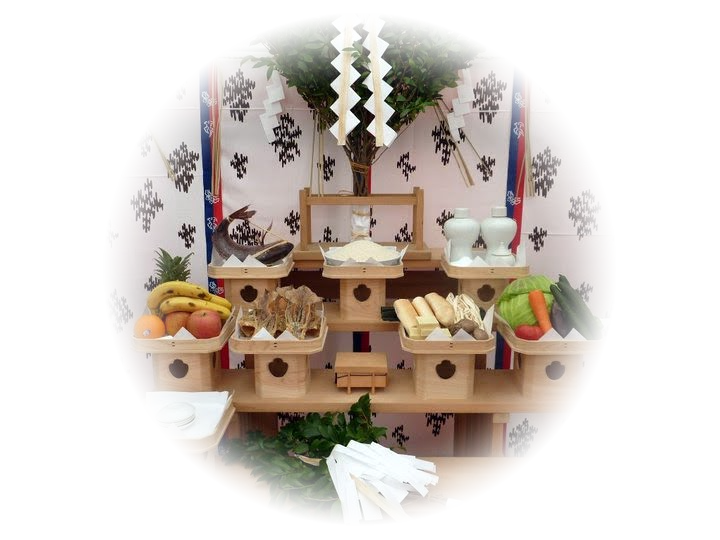
Home worship is done similarly. To enshrine a Kamisama at home, you have to get their ofuda (お札) from a shrine, and follow the local shrineworkers' advice on how and where to set it up. These home shrines are called "kamidana" (神棚).
Setting up a kamidana is like inviting a Kamisama to your home, and thus etiquette also applies here. It's easy to adhere to most rules with the power of common sense, but some other common ones include:
- ꩜ Not offering meat, or put anything in or near the kamidana that's death-related.
- ꩜ Putting it in a quiet part of the home, facing southeast and making sure it's above eye level.
- ꩜ If the house has multiple stories, putting the cloud (雲) kanji above it in some form so that upstair neighbors don't symbolically trample on Kamisama.
- ꩜ Not using nails when constructing the kamidana.
- ꩜ Not mixing Shinto tradition with anything besides Buddhism. Separate practice is fine.

Once again, these vary by location and tradition. It's always best to ask the local shrineworkers about it.

